
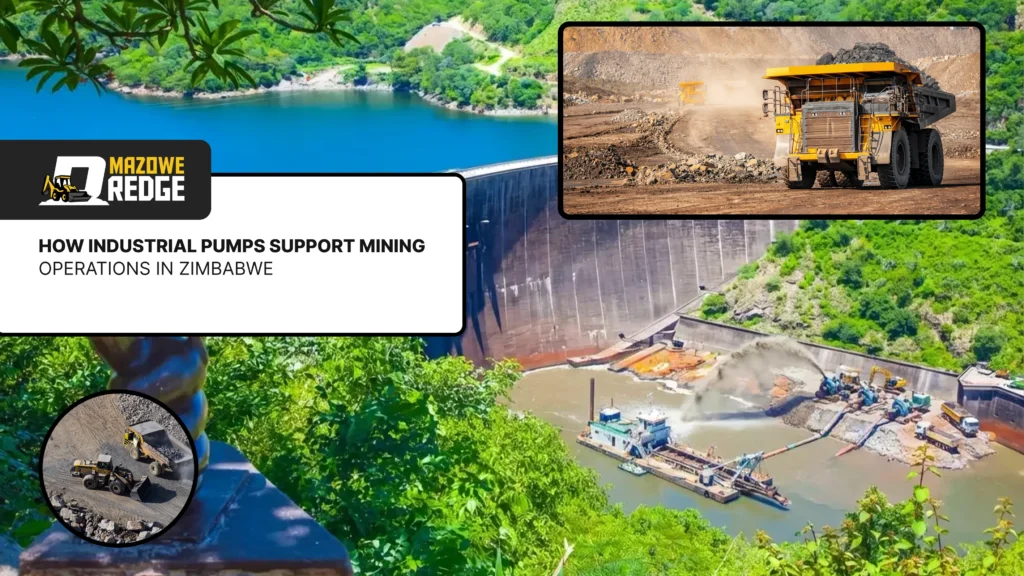
Mining sites in Zimbabwe deal with water and material movement on a daily basis. Open pits fill during the rainy season; tailings must be moved without blocking lines, and dredging depends on steady flow rather than peak performance metrics. In these conditions, industrial pumps are not supporting equipment. They determine whether work continues or stops.
Most mining operations across Zimbabwe face similar issues. Slurry contains sharp solids, water tables change quickly, and sites are often far from immediate technical support. This is where pump selection becomes a practical decision, not a specification exercise. Pumps that look suitable on paper often fail early when exposed to abrasive material or continuous duty cycles, especially in Zimbabwe dredging projects.
Mazowe Dredge works with mining operators who need pumping systems that match site conditions rather than generic catalog ratings. The company supplies industrial pumps for dewatering, slurry transfer, and dredging, along with pipes, hoses, and system components commonly used on local projects. Importantly, the equipment is supported locally, reducing downtime when operating conditions change.
This article examines how industrial pumps are used across mining operations in Zimbabwe, where failures are common, and what to consider when selecting pumps for dredging and slurry-handling work. The focus is on practical operation, not theory, and on solutions that align with real project conditions in Zimbabwe.
Zimbabwe Mining Conditions and Why Pump Selection is Not Straightforward
Mining sites in Zimbabwe rarely operate under controlled conditions. Water levels change quickly, material quality varies from one section of a site to another, and pumping equipment is often expected to run for long hours without interruption. As a result, industrial pumps used in mining operations are often operated beyond standard specifications.
In many gold and alluvial mining areas, slurry contains a high percentage of sand and sharp particles. This causes faster wear on impellers and internal liners, especially when pumps are selected based only on flow rate. In Zimbabwe dredging projects this becomes more noticeable. Sediment composition can change within the same river stretch, which means a pump that performs well in one area may struggle a few days later.
Another common issue is access. Several mining operations are located far from service centres. When a pump fails, replacement parts are not always available immediately. This makes reliability and simplicity more important than peak efficiency. Pumps that are easy to inspect, maintain, and repair on site tend to perform better over time, even if their output is lower on paper.
Power supply also affects pump performance. Some sites operate on generators, while others deal with unstable grid power. Pumps that are sensitive to voltage fluctuations often experience seal or motor issues. In these cases, choosing robust industrial pumps with lower operating speeds and proven field performance becomes a practical necessity rather than a technical preference.
Mazowe Dredge works around these realities by supplying pumping equipment that is already used in similar mining and dredging environments. Instead of matching pumps solely to calculations, selection is based on how the equipment behaves with abrasive materials, long-run hours, and limited maintenance windows. This approach aligns more closely with how mining operations operate in Zimbabwe.
How Pumps are Used on Mining Sites in Zimbabwe
On most mining sites, pumps operate continuously. Not as a system. Just to keep things moving. Water builds up, slurry needs to be shifted, and sediment has to be cleared. If the pump stops, work slows or stops completely.
Dewatering is usually the first problem. Pits fill faster than expected, especially after rain. Water is rarely clean. It carries sand and fine solids. The pumps used here are expected to start every day and remain operational. Many sites move them often as the pit changes shape, so portability matters more than high output numbers.
Slurry movement creates different issues. Tailings are heavy and abrasive. Particle size is not consistent. Lines block. Wear happens fast. In many mining operations, pumps are deliberately run slower to avoid frequent breakdowns. Losing some flow is better than changing parts every few weeks.
Dredging work adds another layer. In Zimbabwe dredging projects, pumps deal with mixed material pulled directly from riverbeds. Some days it is fine sediment. Other days it includes stones. Discharge distances change as work progresses. That puts pressure not only on the pump, but also on hoses, joints, and fittings.
Mazowe Dredge supplies industrial pumps used in these situations, along with the pipe and hose systems that connect them. The focus is not on a single task, but on keeping equipment working as site conditions change. That is how pumps are actually used on mining projects in Zimbabwe.
Where Pumps Usually Fail First on Zimbabwe Mining Sites
When a pump fails on a mining site, it is rarely sudden. Most failures accumulate over time, and the same components tend to fail first. In Zimbabwe, this pattern is consistent across mining operations and Zimbabwe dredging projects.

Wear parts fail before motors. Impellers and liners take the hit from sand, grit, and sharp particles. On slurry and dredging work, this wear is uneven. One side of the impeller may thin faster, causing vibration long before anyone notices a drop in flow. By the time output falls, damage is already done.
Seals are the next weak point. Dirty water and fine solids work their way past sealing surfaces, especially when pumps are stopped and restarted frequently. In dewatering applications, pumps are often switched on and off based on water levels. This cycling shortens seal life more than continuous operation.
Bearings fail later, but when they do, the downtime is longer. Poor lubrication, misalignment, and vibration from worn impellers all contribute. At remote sites, bearing failures are more problematic because replacements are not always available locally and installation takes time.
Power issues also play a role. Voltage drops and generator fluctuations affect motors and seals. Pumps may continue running, but heat builds up. Over time, this leads to insulation damage or seal hardening. These failures are common with industrial pumps that are not selected for unstable power conditions.
Mazowe Dredge sees these issues repeatedly in the field. That experience influences how pumps are supplied and supported. Equipment is chosen with wear resistance, simple maintenance, and available spares in mind, rather than just performance curves. This reduces the likelihood of early failure and helps mining operations keep pumps running longer under Zimbabwean conditions.
How Pump Selection is Actually Done for Zimbabwe Mining Projects
Pump selection at Zimbabwean mining sites rarely begins with detailed calculations. It usually starts with a problem that needs to be solved quickly. Water is accumulating, slurry is not moving, or dredging output has declined. The question on the site is simple. What pump will keep working here?
The first factor is the material being pumped. In many mining operations, slurry is heavier and more abrasive than expected. Particle size is inconsistent, and the solids concentration varies throughout the day. Pumps selected solely by flow and head often wear out quickly. In practice, operators prefer industrial pumps that can run slower, accept larger solids, and tolerate misuse without immediate failure.
Distance matters more than flow rate. Discharge lines on Zimbabwe dredging projects are often extended as work progresses. Every extra meter of hose adds resistance, especially when bends and elevation changes are involved. If this is not considered early, pumps end up overloaded. This is why pump selection is usually tied to hose type, pipe diameter, and layout, not just the pump itself.
Power availability is checked early. Some sites rely fully on generators. Others deal with unstable grid supply. Pumps with high starting loads or tight voltage tolerance cause repeated stoppages. In these cases, simpler drive configurations and proven motor designs are preferred over high-efficiency but sensitive setups.
Maintenance access also influences selection. Mining sites want pumps that can be opened, inspected, and repaired on-site. Complex assemblies slow down work when spares are limited. For this reason, many operators choose equipment with common wear parts and straightforward construction, even if it means accepting a higher initial cost.
Mazowe Dredge supports this selection process by matching pumps to the site’s actual operating conditions. Instead of pushing a single model, the focus is on selecting industrial pumps that suit the materials, power conditions, and operating distances common to Zimbabwean mining and dredging projects. This approach reduces early failures and keeps projects moving with fewer interruptions.
Dredging-Specific Pump Challenges and Setup Decisions in Zimbabwe
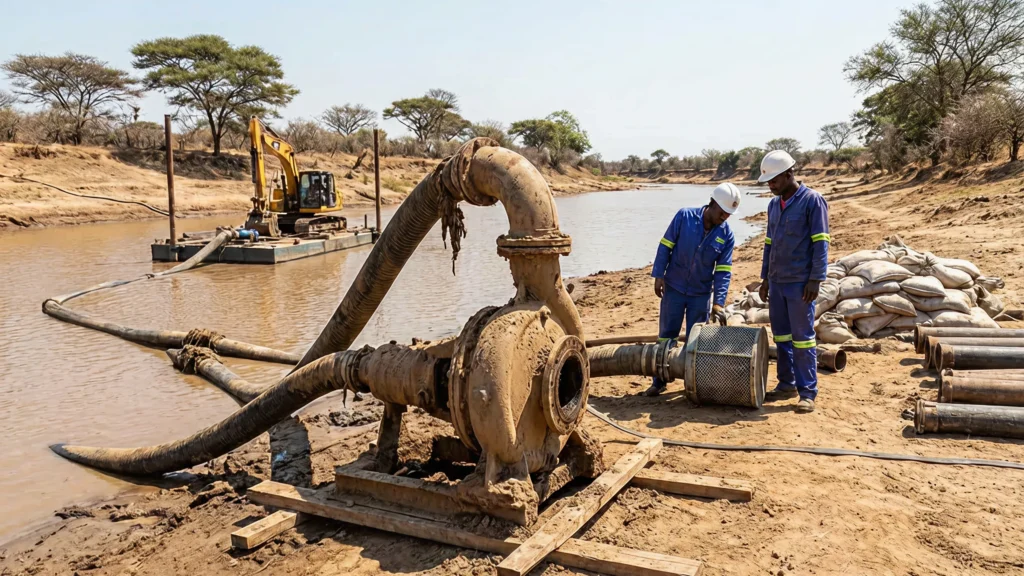
Dredging work in Zimbabwe brings a different set of problems compared to pit dewatering or fixed slurry transfer. Material is taken directly from riverbeds or sedimented areas, and conditions change as dredging progresses. Pumps are expected to handle this variation without frequent stoppages, which is not always straightforward.
One of the main challenges is inconsistent material. In many Zimbabwe dredging projects, the pump may handle fine silt for hours and then suddenly encounter coarse sand or stones. This causes uneven wear and sudden load changes. Pumps selected only for average conditions struggle here. In practice, industrial pumps used for dredging need higher tolerance for solids size and stronger wear components, even if this increases initial cost.
Pump placement is another critical decision. Dredge-mounted pumps reduce suction losses but are exposed to higher vibration and material shock. Shore-based booster pumps reduce stress on the dredge but add complexity to the pipeline layout. Many dredging setups in Zimbabwe use a combination of both, depending on discharge distance and elevation.
Discharge routing also affects pump performance. As dredging moves forward, pipelines are extended, rerouted, or floated. Each change alters pressure requirements. Sharp bends, undersized hoses, or worn couplings increase resistance, forcing pumps to work harder. This is why pump selection on dredging projects is closely tied to pipe and hose selection, rather than treated as a separate decision.
Another challenge is access for maintenance. Dredging sites are often away from workshops, and stopping a dredge to replace parts impacts daily output. Pumps that allow quick inspection and replacement of wear parts are preferred. Simpler designs reduce downtime when unplanned maintenance is required.
Mazowe Dredge supports dredging projects by supplying industrial pumps and supporting components that are already used in similar environments. Equipment is selected with changing material conditions, long discharge lines, and limited service access in mind. This helps dredging operations in Zimbabwe maintain steady output as site conditions evolve.
Why Pipes, Hoses, and Layout Decide Whether Dredging Pumps Work or Fail
On dredging projects in Zimbabwe, pump problems are often blamed on the pump itself. In reality, many failures start in the discharge line. Pipes and hoses, and how they are laid out, determine how hard industrial pumps must work, especially on Zimbabwe’s dredging projects, where layouts change frequently.
Hose diameter is a common issue. To save cost or speed up installation, smaller hoses are sometimes used over long distances. This increases friction losses and forces pumps to run at higher loads. Over time, this accelerates wear on impellers, seals, and bearings. At dredging sites, this problem typically develops gradually, making it easy to overlook until failures occur.
Bends and elevation changes also add stress. Every sharp turn in a pipeline creates resistance and turbulence. As dredging progresses and pipelines are extended, the number of bends increases. Pumps that were stable at the start of the project begin to overheat or vibrate. In mining operations, this is one of the most common reasons pumps underperform despite being correctly sized.
Floating pipelines introduce their own challenges. Floats must keep the line stable without allowing excessive movement. Poorly spaced floats cause sagging, which increases drag and changes internal flow patterns. This directly affects pump efficiency and wear, especially when moving abrasive slurry.
Connections matter as much as hose length. Leaking couplings, worn gaskets, or mismatched fittings allow air ingress and pressure loss. Pumps compensate by working harder, which shortens service life. At remote dredging sites, minor connectivity issues can lead to significant productivity losses over time.
Mazowe Dredge supplies pipe and hose systems selected to match pump capacity and the dredging layout. By treating the pump, pipeline, and layout as one system, mining and dredging operations reduce unnecessary stress on industrial pumps and maintain more stable performance throughout the life of the project.
Cost and Downtime Decisions on Mining and Dredging Sites
On-site, cost discussions rarely start with numbers. They start after something breaks.
A pump goes down. Water backs up. Slurry stops moving. People wait. Fuel is still burning. Labour is still on the clock. That is usually when industrial pumps get judged, not when they are purchased.
Fuel use becomes obvious first. Pumps running harder than they should, usually because of long discharge lines or worn components, consume more diesel. On generator-powered sites, this shows up quickly. Many mining operations accept lower flow if it means the pump can run steadily without pushing the engine all day.
Maintenance cost shows up later. Wear parts do not fail simultaneously. One liner goes thin. Then a seal starts leaking. Then the vibration increases. In Zimbabwe, dredging projects, this cycle is common because material quality changes constantly. When parts are unavailable nearby, downtime extends longer than expected.
This is where rent versus ownership comes in. For short dredging campaigns or temporary dewatering, owning a pump may not be cost-effective. Sites need equipment that works now, not after weeks of procurement. Rental fills that gap. Long-term projects usually prefer ownership, but only when support and spares are accessible.
Mazowe Dredge regularly works with sites facing these decisions. Some projects need pumps for months. Others for weeks. The focus stays on keeping work moving, not on selling a specific configuration. That is usually what matters most on Zimbabwe mining and dredging sites.
Where Mazowe Dredge Fits into Zimbabwe Mining and Dredging Work
Most mining and dredging projects do not fail because the wrong equipment exists. They fail because the right equipment is unavailable when needed, or cannot be kept running on-site. This is where Mazowe Dredge is typically involved.
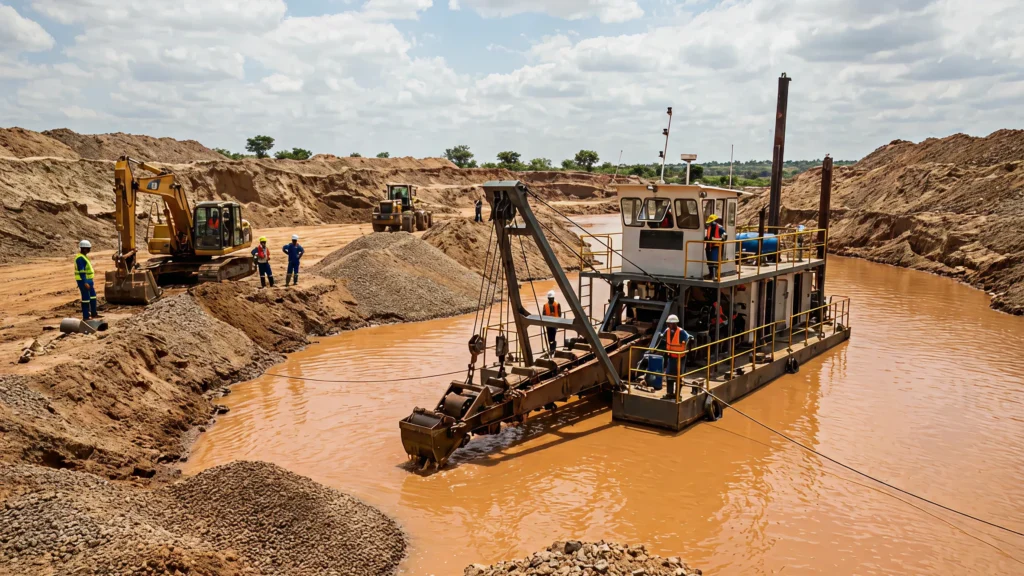
The company works with mining operations that need industrial pumps for dewatering, slurry movement, and dredging, often under time pressure. Sites approach Mazowe Dredge when water levels rise unexpectedly, slurry lines begin to block, or an existing pump setup no longer matches the site’s operating conditions. In these situations, equipment selection is usually based on what can be deployed quickly and supported locally.
Mazowe Dredge supplies pumps that are already used in similar Zimbabwean conditions. This includes slurry pumps for abrasive materials, dewatering pumps for continuous operation, and pumping systems suited to dredging. Pipes, hoses, and related components are part of the same supply discussion because pump performance depends on the full setup, not just the unit itself.
Local availability plays a role. When wear parts or replacements are needed, long lead times create downtime that mining sites cannot afford. Having access to equipment and support within the country reduces this risk. For many mining operations and Zimbabwe dredging projects, this practical support matters more than achieving ideal performance figures.
Mazowe Dredge’s role extends beyond initial supply. The company stays involved as site conditions change, whether that means adjusting discharge layouts, replacing worn components, or switching between rental and owned equipment. This is how pumping systems are kept working in real mining conditions, where plans change, and equipment is pushed daily.
Key Takeaway
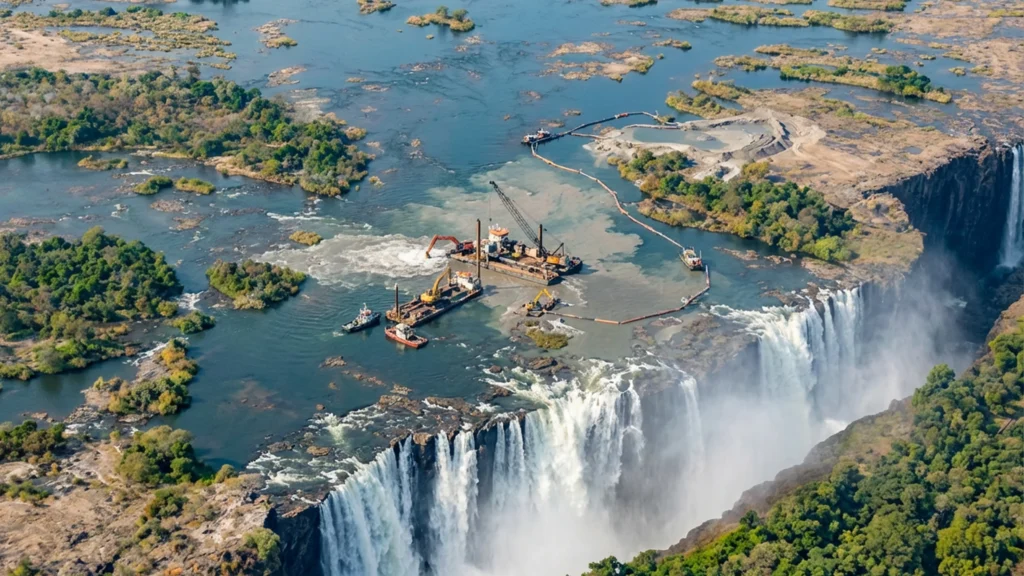
Mining and dredging operations in Zimbabwe depend on equipment that can operate reliably under changing conditions. Industrial pumps play a central role in dewatering, slurry transfer, and dredging, but their performance is shaped as much by site setup and maintenance as by the pump itself. Abrasive material, unstable power, long discharge lines, and limited service access are part of daily operations for many mining sites.
Across mining operations and Zimbabwe dredging projects, the most effective pumping systems are those selected with these realities in mind. Pumps that are easier to maintain, supported locally, and matched to the full piping layout deliver more consistent output over time. Keeping work moving often comes down to practical decisions rather than perfect specifications.
If your project requires reliable industrial pumps for mining or dredging in Zimbabwe, Mazowe Dredge can support equipment selection, supply, and on-site requirements based on local operating conditions. Contact the team to discuss your project needs.